Quick answer
Do not push a deeper route just because you reached the entrance once. Use environmental oxygen, carry Air Bladders, upgrade to the Standard Air Tank when Silver allows it, and turn back when the route has two unknowns at the same time: low oxygen plus poor landmarks, hostile pressure, a cave you have not mapped, or a scan stop. The P3 large-tank footage shows the rule clearly: the route is already dangerous before the recipe screen appears.
Field notes for deeper dives
One entrance does not make a route
Reaching a cave mouth once only proves you found it. A route starts when you can return, leave, and explain the landmarks without panic.
Scanning spends oxygen twice
You lose time while scanning, then lose more time turning yourself back toward the exit. Add that cost before chasing fragments in deep water.
A recipe screen can hide a long oxygen bill
The large oxygen tank route footage reaches deep water, a low-O2 refill moment, and an interior station before the recipe UI. Judge the whole path, not only the final reward.
Leave with a note, not a story
If the dive gets messy, go home with one clear note: the turn-back cue, the missing upgrade, or the landmark you need next time.
Depth examples from video
These P3 route frames show how quickly a blueprint run can become a depth and oxygen problem.
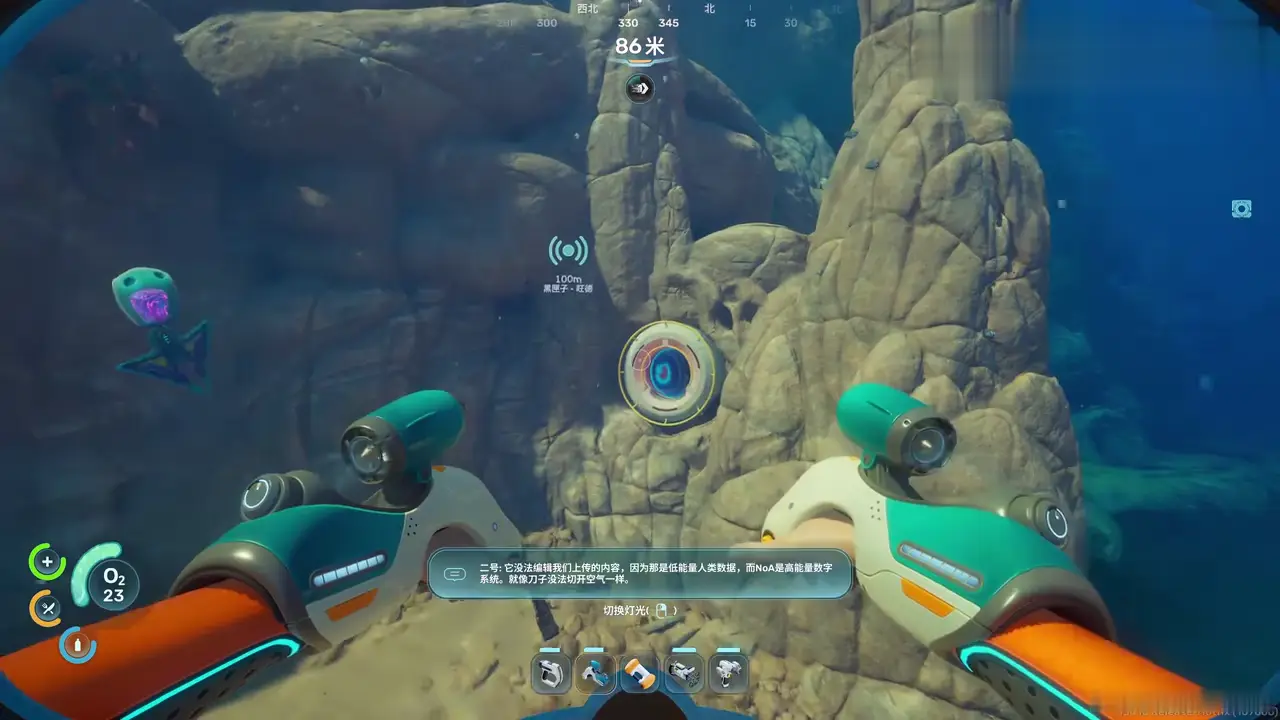
Depth plus low O2 is the red flag
Around 5:08, the route sits near 86 m with only 23 O2 showing. That is not a good time to add another unknown objective.
Bilibili P3 route frame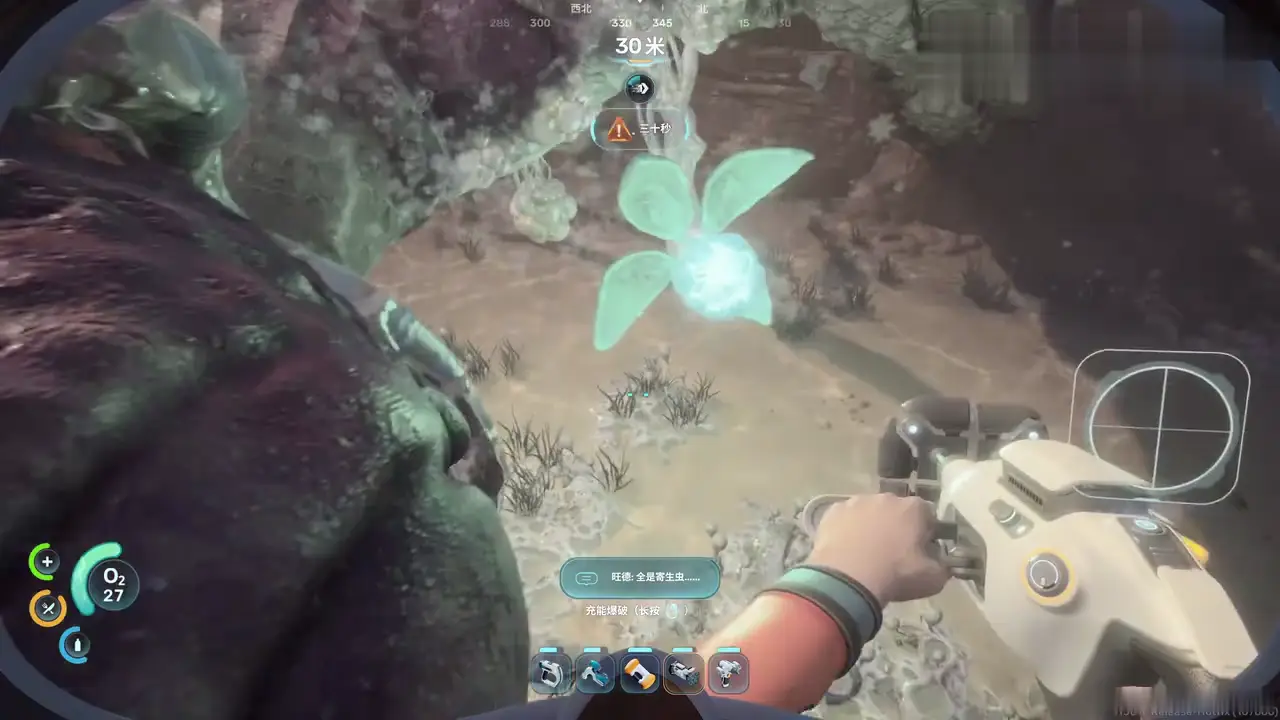
Refill points still require routing
Around 10:10, the player is near an oxygen source but already under 30 O2. If the refill point is your only plan, leave sooner.
Bilibili P3 route frameNotas visuales y fuentes
Arte de ruta original
Abyss Guides usa arte chibi submarino propio en vez de copiar capturas de wikis o imágenes subidas por fans.
Fuente: arte original de Abyss Guides
Tráiler oficial de gameplay de Subnautica 2
El video sirve para ver ambiente, vehículos y biomas. No lo uses como coordenadas exactas de farmeo.
Fuente: inserción oficial de YouTube de SubnauticaHow to judge a deeper dive
Check the return before the reward
Before chasing a scan, wreck, or rare material, ask how you will get back. If the route only works when nothing goes wrong, it is not ready yet.
Use temporary oxygen on scouting trips
Oxygen Tunics, Bloom Sap funnels, cave air pockets, and Air Bladders are route tools. Use them to learn the area before spending materials on a longer plan or committing to a long scan route.
Upgrade when Silver stops blocking you
The Standard Air Tank changes how caves feel. If Silver is the bottleneck, fix that route first instead of forcing deeper trips with the starter timer.
Treat depth as a checklist
A deeper route needs enough O2, a landmark chain, empty inventory slots, one backup air source, and a reason to be there. Curiosity alone is how long swims turn ugly.
Do one committed objective per deep run
If the goal is a large-tank recipe, station, or scan target, do that one thing and leave. Adding bonus resources after the objective is how safe routes turn messy.
Separate scouting from collecting
If the goal is a new biome, wreck, or Bioscanner lead, take notes first and collect on the second trip. A full inventory makes every oxygen mistake more annoying.
Dive decision card
Green
Repeat
Known route, clear landmark chain, spare oxygen.
Yellow
Scout
One unknown is fine if you have a clean return plan.
Red
Leave
Low O2 plus bad visibility, cave turns, or no backup.
Depth readiness checks
| Question | Safe answer |
|---|---|
| Can I describe the way back? | Yes, with a starting landmark, midpoint cue, and return cue. |
| Do I have backup oxygen? | Carry an Air Bladder or know where the next environmental oxygen reset is. |
| Is this a cave or wreck route? | Leave earlier than open water. Bad turns cost more in enclosed routes. |
| Am I low on inventory space? | Go home first. A full backpack makes every deep trip less useful. |
| Is the goal patch-sensitive? | Check current notes before trusting old resource or biome advice. |
| Will I need to scan? | Leave more O2 than usual because scanning locks you in place. |
| Am I chasing a recipe screen? | Reach the station only after you know the exit and refill plan. |
Depth greed wastes more time than turning back
The best Subnautica 2 runs often end early. A clean return with one useful note beats a long panic swim that leaves you with no route, no inventory space, and no idea where the cave entrance was.
FAQ
How do I know when I can dive deeper in Subnautica 2?
Dive deeper when you have better oxygen, a route you can describe, a backup air source, and a clear objective such as a scan, material, or base staging check.
What should I do if I keep running out of oxygen?
Shorten the route, use environmental oxygen, carry Air Bladders, and work toward the Standard Air Tank instead of trying to brute-force the same cave.
Is the Standard Air Tank worth rushing?
Yes, once you can spare Silver, Titanium, and Rubber. It makes early cave and scan routes much less brittle.
Should I ignore a deep resource if oxygen is tight?
Usually yes. Mark the route, leave, upgrade, and come back. A known route is more useful than one risky grab.
What is the biggest mistake on blueprint routes?
Counting only the distance to the reward. You also need oxygen for the approach, the scan or station interaction, turning around, and the exit.