Quick answer
In the first 60 minutes, stay close to the Lifepod, craft the early tool chain, scan before looting, collect Copper for batteries and Scanner progress, find Silver for O2 upgrades, and avoid building a large base until a route proves useful. Subnautica 2 is Early Access, so keep the plan flexible after patches.
Open the Resource Checklist before your next route
Tick off early materials, base pieces, vehicle prep, crafting blockers, and the P2-P10 video route series. It saves only in your browser, so it stays fast and does not require an account.
Open checklistField notes from the first dive
The first landmark is the Lifepod, not the horizon
If you cannot point back to the Lifepod without opening a menu, you are already too far out for a first-hour run. Learn the nearby shape of the seafloor before chasing a pretty drop-off.
Scan before your bag gets loud
A full inventory feels productive, but blueprint progress changes the next run. If you see fragments near a safe oxygen line, scan them before filling the last slots with common material.
End the hour with one boring loop
The best first-hour result is not a rare find. It is one route you can repeat for Copper, Silver, scans, or base pieces without thinking too hard on the return.
Video routes are evidence, not coordinates
The Bilibili run shows the rhythm well: short base checks, quick scans, cautious cave dips, and frequent returns. Use it to copy the habit, not the exact path. Your save, patch version, and spawn-side landmarks can change the route.
Gameplay stills for the route
These stills are not exact coordinates. They are timestamped visual checks from the linked Bilibili run, so you can compare landmarks, depth pressure, and what the player is doing before you copy the habit in your own save.
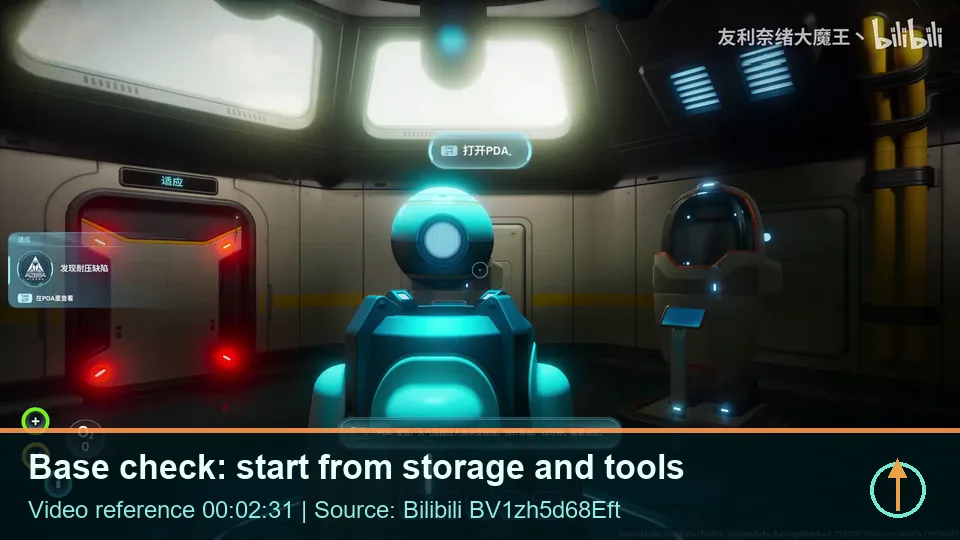
Base check before the next swim
Use the first base stop to empty storage, check tools, and decide one goal for the next dive. Leaving with a messy bag is how short routes turn into panic routes.
Source: Bilibili video 00:02:31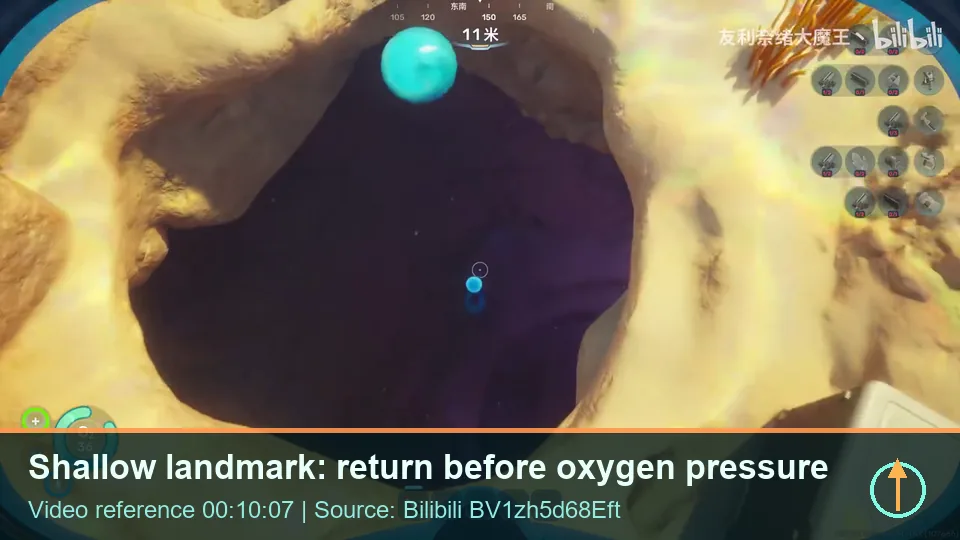
Shallow landmark, not a blind tunnel
Before entering a cave, look for the return shape and your oxygen margin. The useful clue here is the opening itself: if you cannot describe the exit, do not fill the inventory yet.
Source: Bilibili video 00:10:07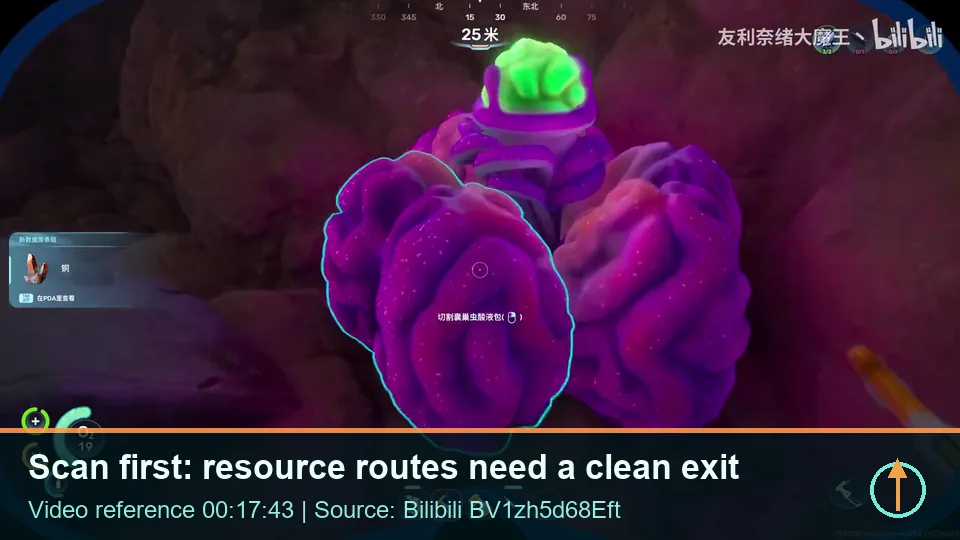
Scan the resource, then leave cleanly
This kind of purple resource room is where beginners overstay. Scan or grab the target, check the tool prompt, then leave while the exit is still obvious.
Source: Bilibili video 00:17:43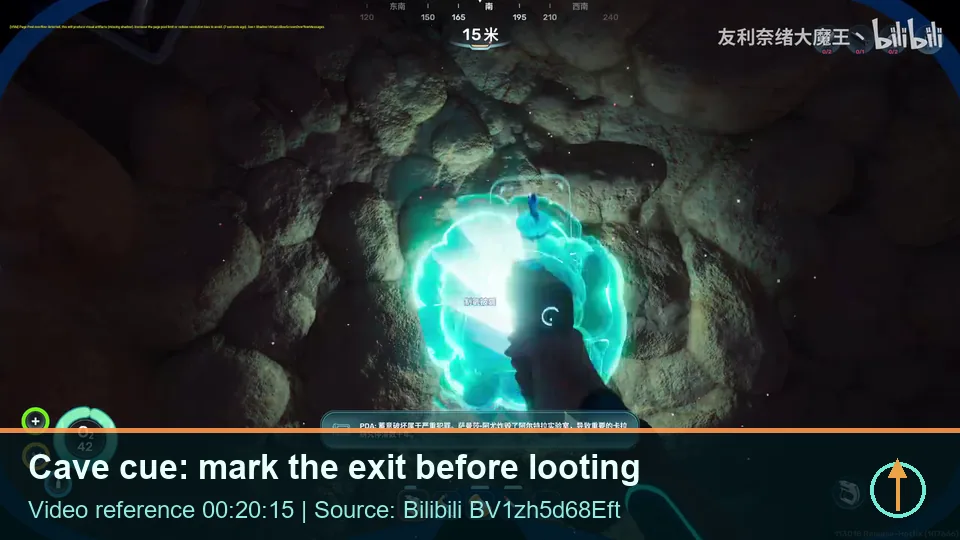
Mark the exit before looting
The screenshot is useful because it shows the problem: tool out, cave walls close, oxygen ticking. Do the scan, take the item, and leave before exploring side branches.
Source: Bilibili video 00:20:15Visual notes and source media
Original route art
Abyss Guides uses original chibi deep-sea art for page visuals instead of copying wiki screenshots or fan uploads.
Source: Abyss Guides original artwork
Official Subnautica 2 gameplay trailer
Use the trailer for mood, vehicles, and biome context. Do not treat trailer scenes as exact farming coordinates.
Source: Official Subnautica YouTube embedFirst-hour route
0-10 minutes: stabilize
Learn the safe area around the Lifepod. Grab common materials, mark obvious landmarks in your head, and return before oxygen becomes a panic timer.
10-25 minutes: craft the tool loop
Copper matters early because it leads into batteries and Scanner progress. Do not leave every interesting fragment for a second trip.
25-45 minutes: build O2 margin
Use Air Bladders and environmental oxygen, then work toward the Standard Air Tank. Silver is the piece that often slows this down.
45-60 minutes: choose a repeatable route
Pick one short loop for Copper, Silver, scans, or base materials. A boring route that works beats a dramatic swim you barely survive.
After the first loop: review the video, not your memory
If you watched a long first-run video, pause after your own first loop and compare categories: did the player check base storage, scan a fragment, gather oxygen-safe materials, or push a new cave? That is more useful than copying every turn.
First-hour flow
Start
Stay close
Learn safe landmarks before chasing the deep view.
Middle
Scan + O2
Scanner progress and oxygen upgrades create real momentum.
End
Repeat loop
One repeatable route is better than five half-remembered swims.
Early priorities
| Priority | Why it matters |
|---|---|
| Oxygen | More O2 turns caves from panic into planning. |
| Scanner | Blueprint progress beats random looting. |
| Copper | Batteries and early electronics start here. |
| Silver | The first big oxygen upgrade often waits on it. |
| Small storage | A tidy base stash prevents constant backtracking. |
Do not sprint past the basics
The most common early mistake is swimming farther because the view looks interesting. If you do not know the return route, do not have oxygen margin, and have not scanned nearby fragments, you are probably skipping progress.
FAQ
What should I do first in Subnautica 2?
Stay near the Lifepod, gather common materials, craft the early tool chain, scan useful objects, and build a short resource loop before pushing deeper.
When should I build my first base?
Build small after you find a route you will repeat. A useful outpost beats a big base in a spot you barely understand.
Is co-op good for beginners?
Yes, if the group uses storage rules and route names. Without that, co-op turns into scattered inventories very quickly.